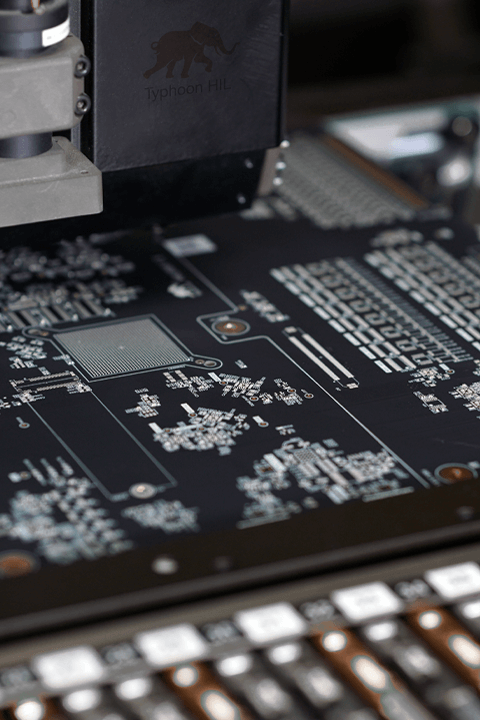
On-Board Charger
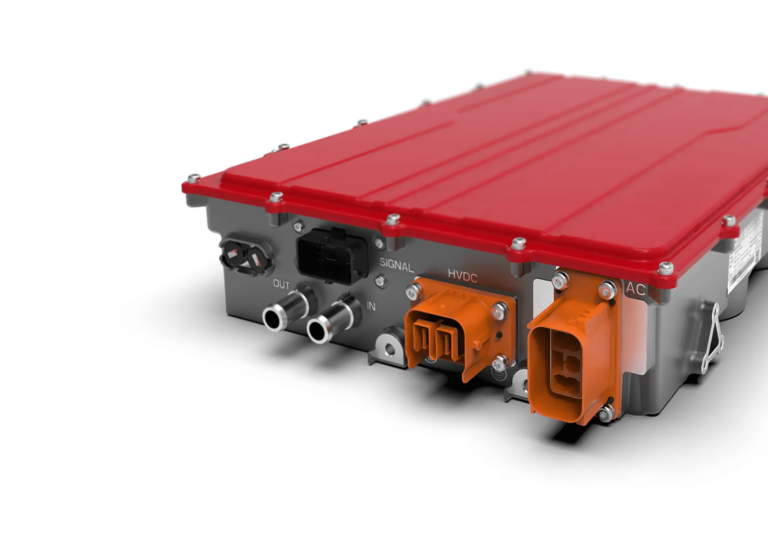
Advancing On-Board Charger Performance
with Real-Time Simulation
As electric vehicle (EV) technology evolves, the efficiency and reliability of on-board chargers (OBCs) are crucial to vehicle performance and user satisfaction. The challenge lies in accurately modeling and testing Power factor correction (PFC) front-end topologies and DC-DC converter stages under real-world conditions. Engineers must address variable grid conditions, electromagnetic interference, and design constraints while ensuring optimal energy conversion. Typhoon HIL’s ultra-high-fidelity real-time simulation platform provides a seamless solution to these challenges, enabling comprehensive testing and validation of OBC designs with unparalleled precision and efficiency.
High-Fidelity PFC Front-End Simulation
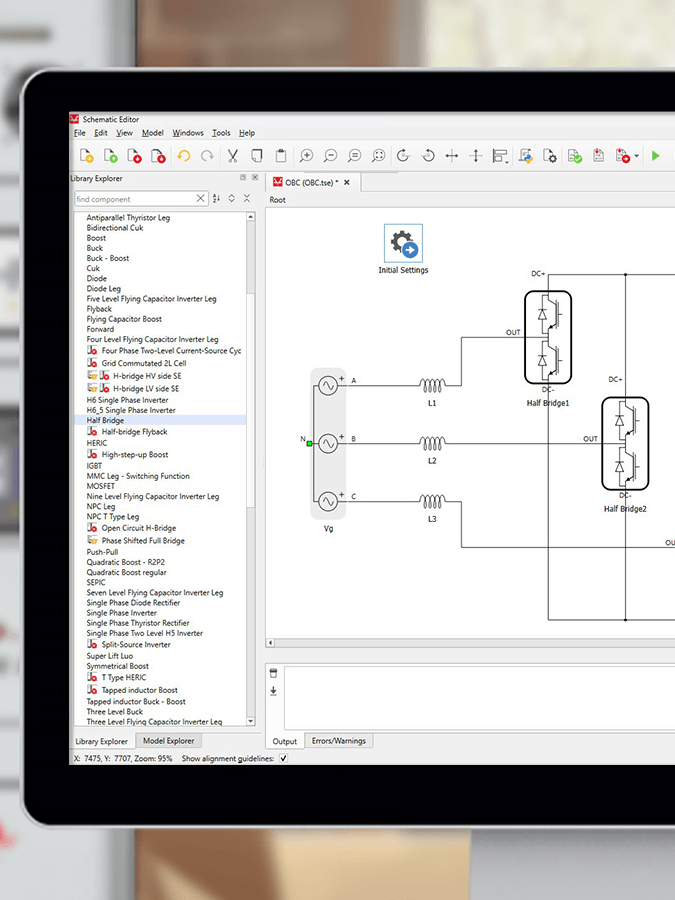
Typhoon HIL’s solutions empower engineers to simulate and validate a broad range of PFC front-end topologies, including single-phase and three-phase configurations. With an extensive library of rectifier and active power factor correction (APFC) models—featuring totem-pole, Vienna, and other advanced rectifier topologies—the platform facilitates real-time, high-fidelity testing of grid-connected OBCs.
Engineers can assess system responses to disturbances, voltage sags, and frequency variations, ensuring robust grid compliance. The software’s intuitive workflow and seamless hardware integration streamline design iterations, reducing development time and enhancing efficiency.
UltraCore Solver
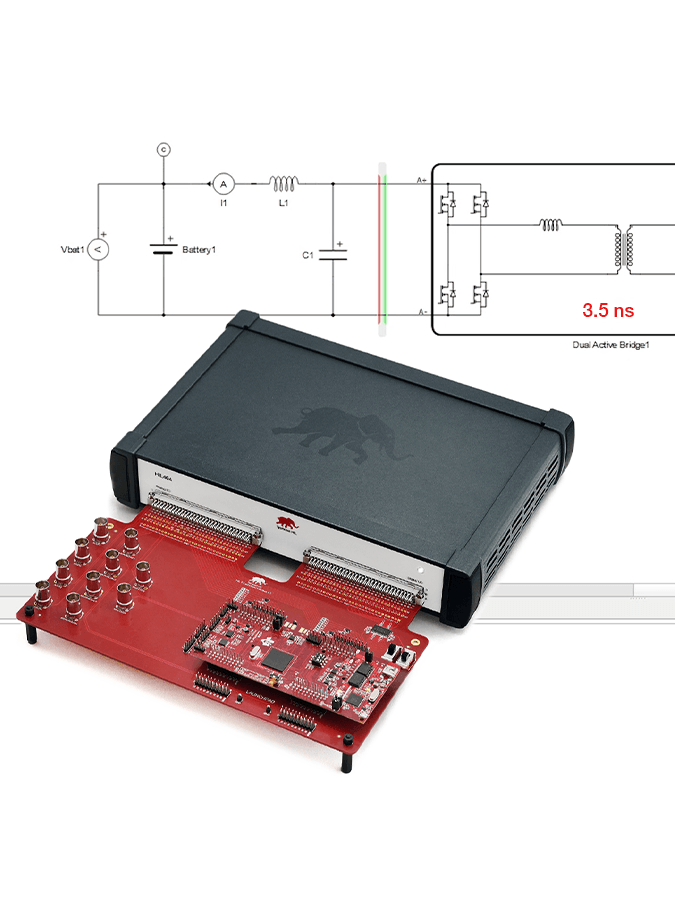
The second stage of an on-board charger, the DC-DC conversion stage, plays a pivotal role in delivering efficient and stable power to the vehicle’s battery. Typhoon HIL provides a versatile environment for testing various UltraCore-supported converter topologies, including resonant and dual-active bridge designs. With UltraCore, Typhoon HIL’s advanced FPGA-based solver delivering nanosecond-level time resolution (as low as 3.5 ns), engineers gain deeper insights into switching behavior and transient responses. This level of precision ensures that OBC designs meet the highest standards of efficiency, reliability, and safety while minimizing design risks and accelerating time to market.

Seamless, Standard-Compliant Testing for OBC Development
With UltraCore, you can simulate fast-switching converter topologies with nanosecond-level time resolution, verifying multiple standards within the same test system. Our solutions seamlessly integrate with power sources worldwide, adapting to different standards and specifications effortlessly. You can work with your existing components, run tests with a single click, and leverage our comprehensive component library to streamline automation. One test can replicate multiple signaling formats, saving time and improving reliability. Discover how we support your on-board charger testing process.