

Introduction | What the Best Paper Award is About
The Typhoon HIL Best Paper Award shines a spotlight on transformative applied research in power electronics and power systems, celebrating those who bridge the gap between theory and real-world impact through digital innovation. This prestigious award honours pioneering work rigorously validated with real-time simulation, Hardware-in-the-Loop (HIL), and digital twin technologies, recognising operational technology solutions that advance grid digitalisation and sustainable power technologies.
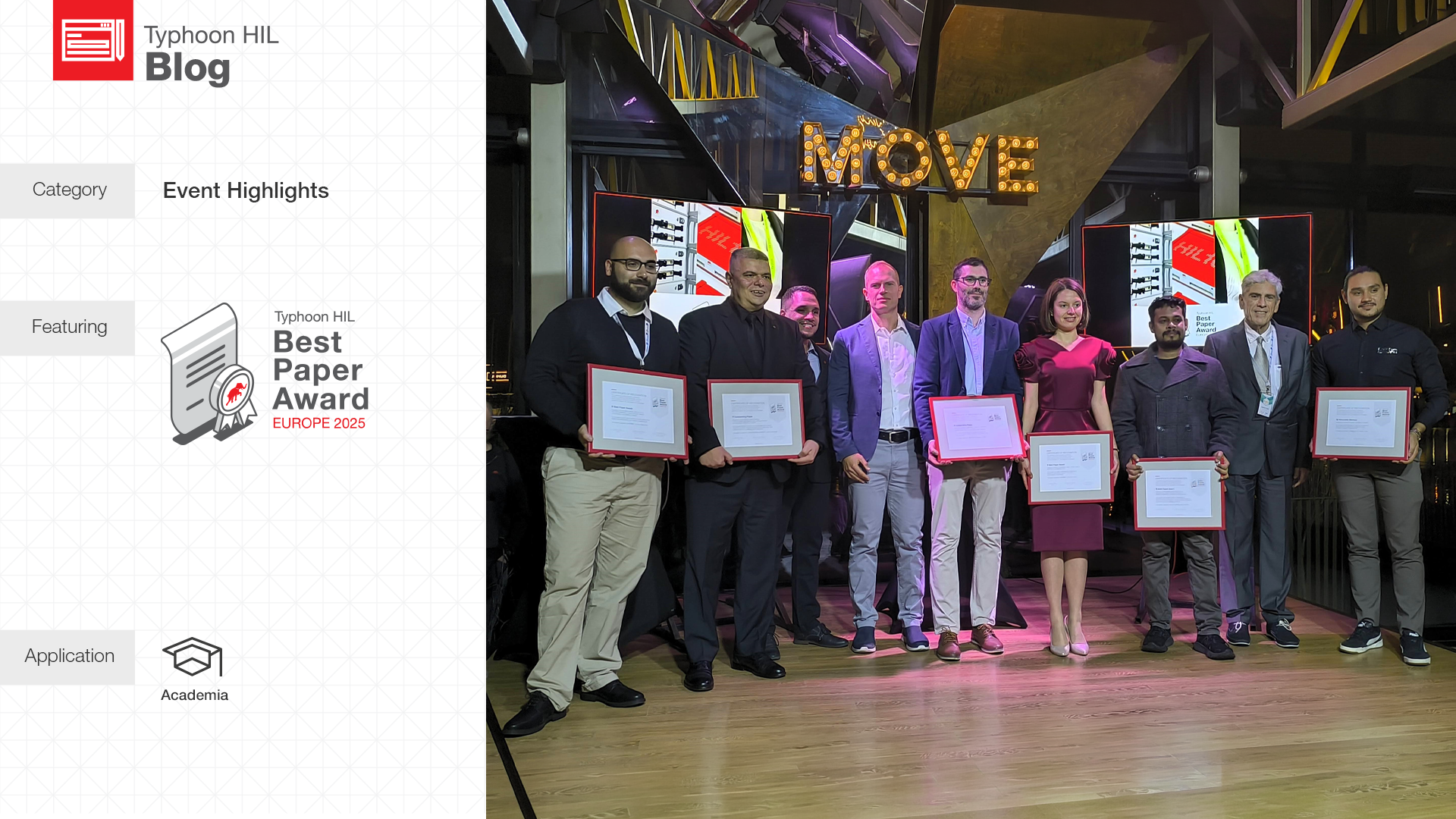
This blog article showcases the awarded papers, contributors, and the breakthroughs propelling the industry forward within the Best Paper Award Europe 2025 edition.
Best Paper Award | All-Port Unterminated Admittance Passivity for Robust Stability of AC-DC Interlinking Converters
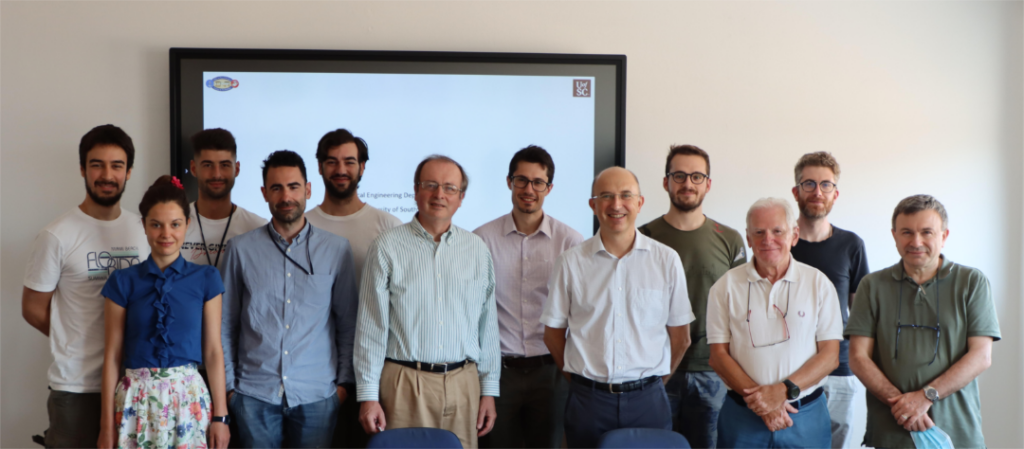
This paper was co-authored by Ružica Cvetanović, Ivan Z. Petrić, Paolo Mattavelli, and Simone Buso, all from the University of Padova, Italy, whose lab the awarded HIL604 will be going to. Their research introduces a novel passivity-oriented controller design framework for AC-DC converters, offering a device-level admittance passivity criterion that enables robust stability analysis and controller design without needing detailed knowledge of the grid impedance.
The team made extensive use of control hardware-in-the-loop (C-HIL) simulations, leveraging the HIL404 to emulate with high-fidelity the power stage behaviour, obtaining results in both frequency and time domains. Further experimental validation on the laboratory prototype confirmed the results and validated the model. Major findings highlight the framework’s termination-independence, reliable prediction and prevention of instabilities, and the achievement of robust, stable operation through multi-sampled pulse-width modulation and feedforward control, successfully preventing port coupling-induced instability in grid-connected scenarios.
The paper was published in the September 2025 issue (Volume 40, Issue 9) of IEEE Transactions on Power Electronics, and can be accessed through IEEE Xplore.
Best Paper Award | A Novel Modular Multilevel Converter Based on Interleaved Half-Bridge Submodules
This paper was co-authored by Aleksandr Viatkin, Mattia Ricco, Riccardo Mandrioli, and Gabriele Grandi from the University of Bologna, Italy, and by Tamás Kerekes and Remus Teodorescu from Aalborg University, Denmark. The research introduces a new Modular Multilevel Converter topology based on Interleaved Half-Bridge Submodules (ISM-MMC), designed for scalable and high-current applications such as ultrafast EV charging. The ISM-MMC structure is highlighted for its improved modularity, output waveform quality, and enhanced efficiency, making it a promising contender for next-generation converter designs.
Hardware-in-the-Loop (HIL) simulations allowed for dynamic behaviour and feasibility assessment of the new converter topology. Major findings include the demonstration of efficiency gains up to 1.56%, a significant reduction in total power losses, and confirmation that classical MMC control techniques are compatible with the ISM-MMC. These results were validated through both HIL simulations and laboratory experiments, underlining the practical advantages and reliability of the proposed system.
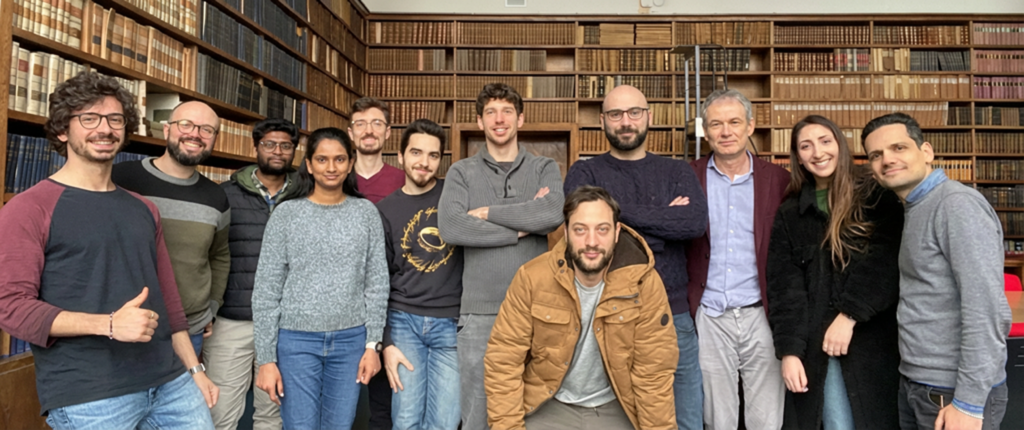
We are deeply honored to receive the Typhoon HIL Best Paper Award Europe 2025, which recognizes research that is both impactful and forward-looking. The HIL604 real-time simulator will be invaluable to the Power Electronic Circuits and Photovoltaics Group at Alma Mater Studiorum – University of Bologna for advancing our research and teaching. This award holds a particularly profound meaning for us, as I have the honor of representing our paper almost one year after the passing of its first author, Aleksandr.
Prof. Riccardo Mandrioli
The paper was published in the January 2023 issue (Volume 70, Issue 1) of IEEE Transactions on Industrial Electronics, and can be accessed through IEEE Xplore.
Best Paper Award | Intelligent Energy Management Scheme-Based Coordinated Control for Reducing Peak Load in Grid-Connected Photovoltaic-Powered Electric Vehicle Charging Stations
This paper was co-authored by Mohammad Amir, Zaheeruddin, and Ahteshamul Haque from Jamia Millia Islamia University, India, Farhad Ilahi Bakhsh from the National Institute of Technology Srinagar, India, V. S. Bharath Kurukuru from the Power Electronics Research Division at Silicon Austria Labs, Austria with joint affiliation at the Jamia Millia Islamia University, and Mostafa Sedighizadeh from Shahid Beheshti University, Iran. Their collaborative research focuses on developing an intelligent energy management scheme-based coordinated control for reducing peak load in grid-connected photovoltaic-powered electric vehicle charging stations. The paper proposes an intelligent energy management scheme with an adaptive neuro-based fuzzy control approach to optimize the PV generation and grid power utilization for EV charging stations. The use of a buffer battery storage system alongside coordinated control to optimise power flow and minimise grid burden during high-demand EV charging scenarios.
For validation, the authors used a rapid control prototyping approach (RCP), where Typhoon HIL Control Center was used to implement the control logic and the HIL402 real-time simulator to realize the controller, providing the switching pulses to the real inverter. This allowed real-time control and experimental testing of the energy management scheme. Major findings reveal that the system can reduce peak power demand on the grid by a factor of two, optimally utilise PV generation, grid power, and battery storage, and shift charging loads to off-peak periods. Both simulation and RCP-based results confirmed the effectiveness of the proposed scheme in managing power flow, maintaining battery state-of-charge, and diminishing the grid impact during dynamic charging conditions.

We are truly honored and grateful to receive this award; it’s a testament to the incredible support and collaboration from Typhoon HIL Company and Quarbz Info Systems, India. Thank you to the organizers for recognizing our work, this recognition is truly inspiring and will motivate us further to do something much better for society.
Prof. Farhad Ilahi Bakhsh
The paper was published in the March 2024 issue (Volume 18, Issue 6) IET Generation, Transmission & Distribution, and can be accessed through Wiley Online Library.
Outstanding Paper | Power System Hardware in the Loop (PSHIL): A Holistic Testing Approach for Smart Grid Technologies
This Outstanding Paper title was awarded to co-authors Manuel Barragán-Villarejo, Francisco de Paula García-López, Alejandro Marano-Marcolini, and José María Maza-Ortega, all from the Department of Electrical Engineering at the University of Sevilla, Spain. Their paper explores the development and implementation of the PSHIL concept, a comprehensive testing framework extending device-oriented HIL methods to system-oriented evaluations. The approach allows for simultaneous assessment of devices and algorithms, enabling a thorough analysis of their interactions and impacts within modern power systems.
HIL technology is central to this research, with the team utilising both Controller-Hardware-in-the-Loop (CHIL) and Power-Hardware-in-the-Loop (PHIL) approaches. Real-time simulation platforms, power amplifiers, and Load Emulators were used to create a realistic and flexible laboratory environment. Major findings include the establishment of a holistic testing procedure for smart grid solutions, improved voltage profiles and reduced power losses in MV and LV distribution systems, and the demonstration of advanced laboratory setups for near real-world testing of control strategies.

This award strengthens the work methodology of the Electrical Engineering Laboratory at the University of Sevilla, which is based on the use of the HIL concept to transfer its research work on real solutions for modern power system. In recent years, Typhoon HIL solutions have helped us to significantly increase the quantity and quality of our work during the development of our laboratory. We are very grateful to Typhoon HIL, and it is always a pleasure to collaborate with you and participate in any event.
Prof. Manuel Barragán-Villarejo
The paper was published in the July 2020 issue (Volume 13, Issue 15) of Energies, and can be accessed through MDPI.
Outstanding Paper | Optimal Power Flow-Based Reactive Power Control in Smart Distribution Network Using Real-Time Cyber-Physical Co-Simulation Framework
This research was co-authored by Raju Wagle from The Arctic University of Norway, Norway, Pawan Sharma from the Norwegian University of Science and Technology (NTNU), Norway, Charu Sharma and Jose Luis Rueda from Delft University of Technology (TU Delft), The Netherlands, and Mohammad Amin and Francisco Gonzalez-Longatt from the University of Exeter, UK. The paper presents an innovative approach to mitigating voltage violations and optimising reactive power in smart distribution networks. It leverages a cyber-physical co-simulation framework to enable real-time monitoring and control of distributed energy resources, aiming for enhanced reliability and operational efficiency in future smart grids.
The research was conducted at the Digital Energy Systems Laboratory, where Typhoon HIL HIL604 served as the real-time simulator for hardware-in-the-loop (HIL) control and validation. The framework integrates OpenDSS as the distribution network solver and Python-based APIs for simulation coordination, facilitating real-time voltage regulation and optimisation. Major findings include the successful real-time mitigation of voltage violations, efficient determination of optimal reactive power setpoints using differential evolution algorithms, and the scalability and adaptability of the methodology for various network types and scenarios. This demonstrates the framework’s suitability for future smart grid applications and studies.
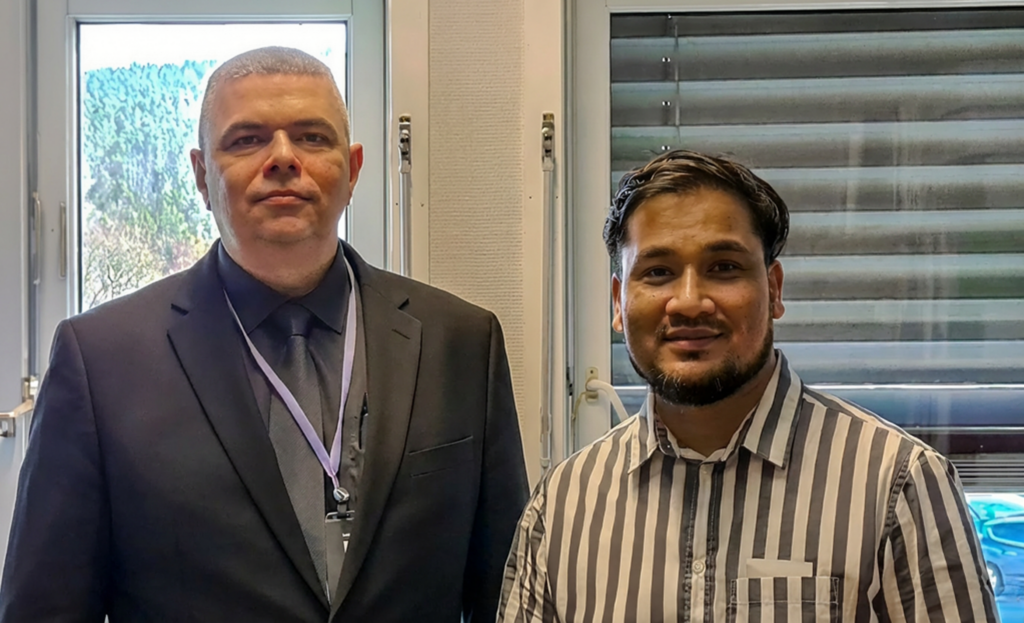
Typhoon HIL Best Paper Award Europe 2025 award is not just a recognition of research, but also the celebration of innovation that bridge the theory and real-world impact, inspiring energy researcher to test and develop real-time solution by pushing the boundaries of sustainable energy, resilient system and smarter technologies for the future.
Prof. Raju Wagle
The paper was published in the February 2023 issue (Volume 17, Issue 20) of IET Generation, Transmission & Distribution, and can be accessed through Wiley Online Library.
Honorable Mention | Interoperability Specifications for Multi-Vendor Converter-Dominated Grid: A Robust Stability Perspective
This paper was co-authored by Federico Cecati from the University of Trento, Italy, and Marco Liserre, Chair of Power Electronics, Christian-Albrechts University of Kiel, Germany, and Fraunhofer Institute for Silicon Technology, Germany. Their research explores robust stability analysis for converter-dominated grids, particularly where details of vendor control systems are confidential. The paper introduces a nonlinear grey-box modelling strategy for grid-following converters, enabling accurate stability assessment and the derivation of interoperability specifications that can be respected by multiple vendors without disclosing proprietary information.
Hardware-in-the-Loop (HIL) technology played a crucial role in the validation process, with real-time simulations conducted on a Typhoon HIL 402 device. These HIL experiments confirmed the effectiveness and robustness of the proposed modelling methodology under various operating conditions. Major findings include the demonstration that nonlinear grey-box models outperform traditional small-signal models for stability analysis, the formulation of interoperability specifications using robust control theory (μ-analysis), and experimental validation showing that adherence to these specifications ensures grid stability while non-compliance may lead to instability. This research provides practical guidelines for system operators and supports the reliable integration of multi-vendor converter technologies into modern power grids.
The paper was published in the July 2025 issue (Volume 16, Issue 4) of IEEE Transactions on Smart Grid, and can be accessed through IEEE Xplore.
Honorable Mention | Active Disturbance Rejection Control with a Cascaded Extended State Observer for Pumping Kite Generator Systems Robust DC-Link Voltage Control
This paper was co-authored by Mouaad Belguedri and Abdeldjabar Benrabah from Military Polytechnic School (EMP), Algeria, Yassine Amirat from ISEN Ouest, France, Farid Khoucha from the University of Médéa, Algeria, Mohamed Benbouzid from the University of Brest, France, and Khelifa Benmansour from Shanghai Maritime University, China. The paper focuses on advancing robust DC-link voltage control for pumping kite generator systems by introducing a Modified Cascaded Active Disturbance Rejection Control (MCADRC) technique, which aims to significantly improve voltage regulation accuracy, response time, and resilience against disturbances, especially in the context of wind energy generation.
HIL Technology played a central role in validating the proposed control strategy. The research utilised Typhoon HIL 404 Emulator for hardware-in-the-loop (HIL) experiments, enabling real-time emulation of the electrical power structure comprised by a permanent magnet synchronous machine, connected to the grid via a back-to-back converter and an inductive filter. The control algorithms and kite model were implemented on a dSPACE RCP platform, interfaced with Typhoon HIL for real-time testing. Major findings demonstrate that MCADRC delivers superior immunity to periodic and abrupt disturbances, reduced voltage fluctuation and recovery time, and consistent performance across varying wind speeds and parameter mismatches, as confirmed by the HIL validation results.
We are thrilled that our pluridisciplinary work on Renewable Energy Systems, with a specific focus on Control Systems Engineering and Power Electronics for Airborne Wind Energy has been recognized by the Typhoon HIL Best Paper Award Europe 2025 presented at the Ee Symposium. This award encourages us to continue pushing the boundaries in this exciting field.
Prof. Yassine Amirat
The paper was published in the June 2025 issue (Volume 40, Issue 2) of IEEE Transactions on Energy Conversion, and can be accessed through IEEE Xplore.
Conclusion | Join Us in the Upcoming Best Paper Award Editions
As we celebrate the awarded papers at Typhoon HIL Best Paper Award Europe 2025, we extend our heartfelt thanks to every researcher and team who submitted their work. Your dedication and innovation have inspired and enriched the conversation around power electronics, power systems, and smart grid technologies, making this competition a true showcase of international excellence. Special appreciation goes out to the independent expert Evaluation Committee, whose rigorous and unbiased review ensured the highest standards and fairness, and to the organisers at Typhoon HIL, whose tireless commitment and vision made this award a reality.
We are excited to soon open the submissions for the Best Paper Award US 2026 edition, for which the award ceremony will be held at Typhoon HIL TechDay 2026. We look forward to even more groundbreaking research and vibrant community engagement in the next chapter. To all participants, reviewers, organisers, and readers, we thank you for advancing the field and helping shape the future of sustainable power systems. Stay tuned for further updates and opportunities to connect, share, and celebrate innovation together!